
How to Buy an Air Conditioner Without Overpaying
When a heat wave hits, it's tempting to grab the first air conditioner in stock and be done. But a few minutes of knowing what to look for saves you from the three classic mistakes: buying the wrong size, paying for a "big BTU" number that isn't real, and shopping at the single most expensive time of year. Here's how to get the cooling you need without overpaying for it.
Size it right — bigger isn't better
Cooling capacity is measured in BTUs, and the rule of thumb is roughly 20 BTU per square foot of room. As a rough guide:
- Up to ~200 sq ft (a small bedroom or office) → around 8,000 BTU
- ~300–350 sq ft (a large bedroom or small living room) → around 12,000 BTU
- ~400+ sq ft (an open living space) → 14,000 BTU and up
Resist the urge to oversize "to be safe." An AC that's too powerful cools the air fast, shuts off, and never runs long enough to pull the humidity out — so the room feels cold and clammy, the unit short-cycles, and you paid more for a worse result. Bump the number up only for a sunny room, a kitchen, or a space with several people in it.
Read the real cooling number (the BTU trick)
Here's the part almost nobody knows. Portable air conditioners are often advertised with an old "ASHRAE" BTU number that's inflated — the real, DOE-standard figure is called SACC (Seasonally Adjusted Cooling Capacity), and it's typically 25–35% lower. So a portable marketed as "14,000 BTU" might actually deliver more like 9,000–10,000 BTU of real cooling.
The fix: compare SACC to SACC. When you're looking at portables, find the SACC number (it's on the spec sheet and the EnergyGuide label) and size the room by that, not the big marketing number on the front of the box.
Portable vs. window — pick the cheaper one you can actually use
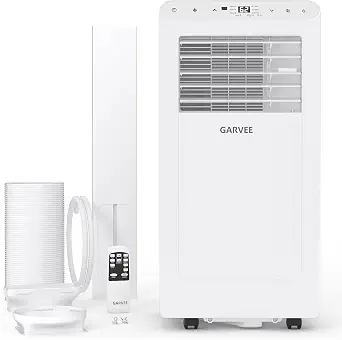
For the same real cooling, a window unit is usually cheaper to buy and more efficient to run than a portable. Portables lose some of their cooling out the exhaust hose and cost more per BTU. So the default choice is a window unit — reach for a portable only when you genuinely can't mount one: casement or sliding windows, a rental that forbids window units, or a room with no suitable window. Don't pay the portable premium for convenience you don't need.
Don't ignore running cost
The sticker price isn't the whole cost. A cheap, inefficient unit running all summer can cost more than a pricier efficient one. Check the efficiency rating (CEER/EER — higher is better) and the estimated yearly cost on the yellow EnergyGuide label. Over a hot season, a more efficient unit often pays back its higher price on your electric bill.
Time it right — mid-summer is the worst time to buy
The cruel truth: prices are highest exactly when you need one most. The best pricing comes in the off-season — late August into September as stores clear summer stock, and deeper still through fall and winter, where discounts can run 20–40% below an emergency mid-summer purchase.
So the smart play depends on your situation:
- If you can wait, buy at the end of the season or in the off-season and store it for next year. That's where the deepest discounts live.
- If you need it now, don't pay full sticker — watch for the summer flash deals and multi-model bundles that still pop up, and use the sizing and SACC rules above so you don't overpay for capacity you can't use.
The bottom line: match the real (SACC) cooling number to your room, default to a window unit unless you can't use one, check the efficiency label, and buy in the off-season if you possibly can. Get those right and you'll stay cool without the overpay. A current AC deal is below, along with more of today's offers.
